
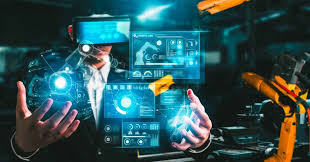
The Internet of Robotic Things represents the convergence of robotics, sensors, communication networks, cloud computing, and artificial intelligence into an integrated system of intelligent, connected devices. These devices are not only capable of performing autonomous actions but also of communicating, sharing data, and collaborating with other devices, human users, and infrastructure. By 2025, the Internet of Robotic Things has emerged as a transformative paradigm that enhances industrial automation, smart cities, healthcare, logistics, agriculture, and public services. The system extends the traditional Internet of Things by integrating physical actuation, advanced robotics, and real time intelligence, creating a dynamic network where devices perceive, decide, act, and interact seamlessly.
The Internet of Robotic Things combines the sensing, computation, communication, and actuation capabilities of robotics with the distributed connectivity and data processing of Internet of Things platforms. Each device collects environmental and operational data, communicates with peers and cloud platforms, analyzes information through embedded or remote intelligence, and executes actions that optimize performance, safety, and human experience. These systems create adaptive, self optimizing networks capable of collaborative decision making, predictive response, and autonomous operation across industries and urban environments.
The potential of the Internet of Robotic Things is vast. Intelligent robots can monitor industrial processes, coordinate with drones for logistics, assist in emergency response, support precision agriculture, and perform autonomous tasks in healthcare and public infrastructure. The convergence of AI, cloud computing, edge processing, and robotics enables dynamic, real time adaptation to changing environments, creating more resilient, efficient, and intelligent systems. As these technologies continue to evolve, the Internet of Robotic Things is expected to redefine operational efficiency, safety, and human interaction with intelligent systems.
Architecture of the Internet of Robotic Things
The architecture of the Internet of Robotic Things is composed of multiple layers that integrate perception, processing, communication, and actuation in a unified framework.
1. Sensing and Perception Layer
The sensing and perception layer is the foundation of every Internet of Robotic Things system. Devices are equipped with diverse sensors including cameras, lidar, radar, ultrasonic range finders, temperature sensors, pressure sensors, chemical sensors, motion detectors, and tactile sensors. These sensors gather data about the environment, device status, human presence, and operational conditions. Advanced perception algorithms process sensor data to detect objects, identify patterns, track movement, and interpret complex surroundings. Multimodal sensing ensures redundancy, reliability, and comprehensive situational awareness, enabling robots to make informed decisions and collaborate effectively with other devices and humans.
2. Communication and Networking Layer
Connectivity is essential for coordinating autonomous devices and enabling real time collaboration. The Internet of Robotic Things uses a combination of communication channels including wireless local area networks, cellular networks, low power wide area networks, and satellite connections. Communication protocols ensure secure, efficient, and reliable data transfer between devices, edge processors, and cloud platforms. Networking strategies address latency, bandwidth optimization, fault tolerance, and scalability. By 2025, advanced communication methods such as 5G and beyond provide high speed, low latency connectivity that supports synchronized operations, collaborative tasks, and rapid decision making.
3. Processing and Intelligence Layer
Processing and intelligence layer is responsible for analyzing sensor data, performing computation, and generating actionable insights. This layer leverages edge computing, cloud computing, and hybrid models to optimize responsiveness and scalability. Edge processing allows devices to analyze data locally, reducing latency for time sensitive decisions. Cloud platforms provide large scale computation, advanced analytics, and machine learning capabilities for global optimization, predictive modeling, and coordination across multiple devices and networks. Artificial intelligence algorithms including machine learning, reinforcement learning, computer vision, and natural language processing enable devices to learn from experience, predict outcomes, and adapt their behavior autonomously.
4. Actuation and Control Layer
The actuation and control layer translates intelligence and decisions into physical actions. Actuators include electric motors, hydraulic systems, pneumatic systems, robotic arms, grippers, wheels, and manipulators. Control systems ensure precise movement, stability, force application, and task execution. Advanced algorithms coordinate multiple actuators to perform complex operations in dynamic environments. Actuation is tightly integrated with sensing and processing layers to enable real time response, collaborative task execution, and adaptive behavior. Safety protocols, redundancy, and fail safe mechanisms are essential to prevent accidents and ensure reliable operation in human shared environments.
5. Integration and Interoperability Layer
The integration and interoperability layer ensures seamless collaboration between devices, platforms, and users. Standards, protocols, and interfaces enable heterogeneous devices from different manufacturers to communicate and operate cohesively. Interoperability supports collaborative robotics, swarm operations, multi device orchestration, and distributed intelligence. By maintaining consistent data formats, secure authentication, and standardized protocols, systems achieve higher reliability, efficiency, and scalability. Integration also enables human operators to monitor, control, and interact with robotic networks effectively.
Applications of the Internet of Robotic Things
The Internet of Robotic Things is applied across industries and domains where autonomous operation, real time intelligence, and collaborative coordination provide significant benefits.
1. Industrial Automation
In manufacturing, the Internet of Robotic Things enables smart factories with interconnected robotic arms, automated guided vehicles, inspection systems, and assembly lines. Devices communicate and coordinate to optimize production schedules, prevent downtime, and improve product quality. Predictive maintenance is enhanced through real time monitoring of machine health, vibration, temperature, and usage patterns. Human workers collaborate safely with robots, leveraging augmented intelligence for efficiency and safety. Factories benefit from adaptive workflows that respond to real time operational data.
2. Smart Cities and Public Infrastructure
The Internet of Robotic Things supports urban management including traffic control, environmental monitoring, public safety, waste management, and energy optimization. Autonomous vehicles, drones, and robotic sensors collect and analyze data to optimize traffic flow, detect hazards, monitor air quality, and support emergency response. Infrastructure is maintained proactively through robotic inspection and predictive maintenance. Citizens benefit from improved service efficiency, safety, and sustainability, while cities gain insights to inform planning and policy decisions.
3. Healthcare and Assisted Living
Medical robots integrated with IoT platforms enhance patient monitoring, telemedicine, surgery, and rehabilitation. Devices track vital signs, detect anomalies, deliver medication, and provide assistance to patients and elderly individuals. Robotic systems coordinate with healthcare professionals to optimize treatment plans, manage logistics, and reduce human error. Real time data sharing and AI analysis enable personalized care, early intervention, and continuous monitoring, improving patient outcomes and operational efficiency.
4. Agriculture and Environmental Monitoring
Agricultural robots connected to intelligent networks perform planting, irrigation, harvesting, pest detection, and yield monitoring. Sensors gather soil conditions, moisture levels, nutrient composition, and weather data. AI algorithms analyze information to optimize resource use, increase productivity, and reduce environmental impact. Environmental monitoring systems use robotic sensors and autonomous drones to track climate conditions, pollution levels, wildlife movement, and ecosystem health. The Internet of Robotic Things enhances sustainability, precision, and adaptability in agriculture and environmental management.
5. Logistics and Supply Chain
The Internet of Robotic Things transforms warehousing, inventory management, and delivery operations. Autonomous mobile robots, drones, and robotic sorters communicate to optimize routes, manage stock, and coordinate shipments. Real time tracking, predictive analytics, and collaborative coordination improve efficiency, reduce errors, and support scalable logistics networks. Integration with cloud and edge computing ensures visibility, optimization, and responsiveness across the supply chain.
6. Disaster Response and Exploration
Robotic networks enable autonomous exploration and disaster response operations. Robots and drones coordinate to assess damage, map affected areas, detect hazards, and support search and rescue. Real time communication, adaptive behavior, and collaborative decision making enhance safety and effectiveness in hazardous environments. The Internet of Robotic Things expands human capability to respond rapidly to crises and operate in inaccessible locations.
Challenges in the Internet of Robotic Things
Despite its potential, the Internet of Robotic Things faces significant technical, operational, and ethical challenges.
1. Security and Privacy
Connected robots collect sensitive data and perform critical tasks, making them targets for cyberattacks. Ensuring secure communication, authentication, data encryption, and access control is essential. Privacy concerns arise from surveillance, data collection, and monitoring of human activity. Security and privacy must be integral to system design to maintain trust and compliance.
2. System Complexity
Integrating heterogeneous devices, sensors, actuators, and platforms increases system complexity. Coordinating multiple devices, handling data overload, ensuring interoperability, and maintaining performance requires robust architectural design, standardization, and testing.
3. Real Time Decision Making
Autonomous robots must process large amounts of data in real time and make accurate decisions. Latency, communication failures, sensor inaccuracies, and algorithm limitations can affect system performance. Balancing computational demands with energy efficiency and responsiveness is a key challenge.
4. Reliability and Maintenance
Robotic networks must operate reliably in dynamic environments. Failures, wear, and environmental conditions affect performance. Predictive maintenance, self diagnostic systems, redundancy, and robust design are required to ensure continuous operation and minimize downtime.
5. Ethical and Societal Implications
The deployment of connected robotic systems raises ethical questions regarding human autonomy, accountability, safety, and job displacement. Systems must be designed to respect human values, support ethical decision making, and operate transparently in human shared environments.
Strategic Integration and Adoption
Successful implementation of the Internet of Robotic Things requires careful planning, infrastructure development, workforce training, and governance strategies.
1. Identifying High Value Applications
Organizations must prioritize use cases where autonomous operation, real time intelligence, and collaborative coordination deliver measurable benefits. Industrial automation, healthcare, logistics, agriculture, and public safety are prime candidates for early adoption.
2. Scalable Infrastructure
Scalable networks, edge and cloud computing, sensor deployment, and robotic systems must be designed to accommodate growth in devices, data volume, and operational complexity. Redundancy, bandwidth management, and processing capabilities ensure robust performance.
3. Workforce and Skills Development
Effective integration requires a workforce skilled in robotics, IoT, artificial intelligence, networking, and human computer interaction. Training programs, certification, and cross functional teams ensure effective operation, maintenance, and innovation.
4. Governance, Ethics, and Compliance
Clear policies for data governance, security, privacy, ethical operation, and compliance with legal frameworks are essential. Transparency, accountability, and continuous monitoring support public trust, regulatory adherence, and responsible deployment.
5. Collaboration and Ecosystem Development
Collaboration with technology providers, research institutions, standardization bodies, and industry consortia accelerates adoption, fosters innovation, and ensures interoperability. Ecosystem development enables cross sector integration, shared infrastructure, and scalable solutions.
Future of the Internet of Robotic Things
By 2025, the Internet of Robotic Things is poised to transform industries, cities, and human experience. Future developments include more autonomous, adaptive, and intelligent robotic networks capable of real time collaboration and decision making. Integration with artificial intelligence, machine learning, cloud and edge computing, and human centered design will enhance efficiency, safety, and responsiveness. Applications in industrial automation, healthcare, logistics, agriculture, disaster response, and smart cities will continue to expand, creating new opportunities for innovation, sustainability, and societal benefit. As the Internet of Robotic Things evolves, it will redefine the interaction between humans, machines, and digital ecosystems, shaping the intelligent, connected world of the future.
No comments yet. Be the first to comment!