
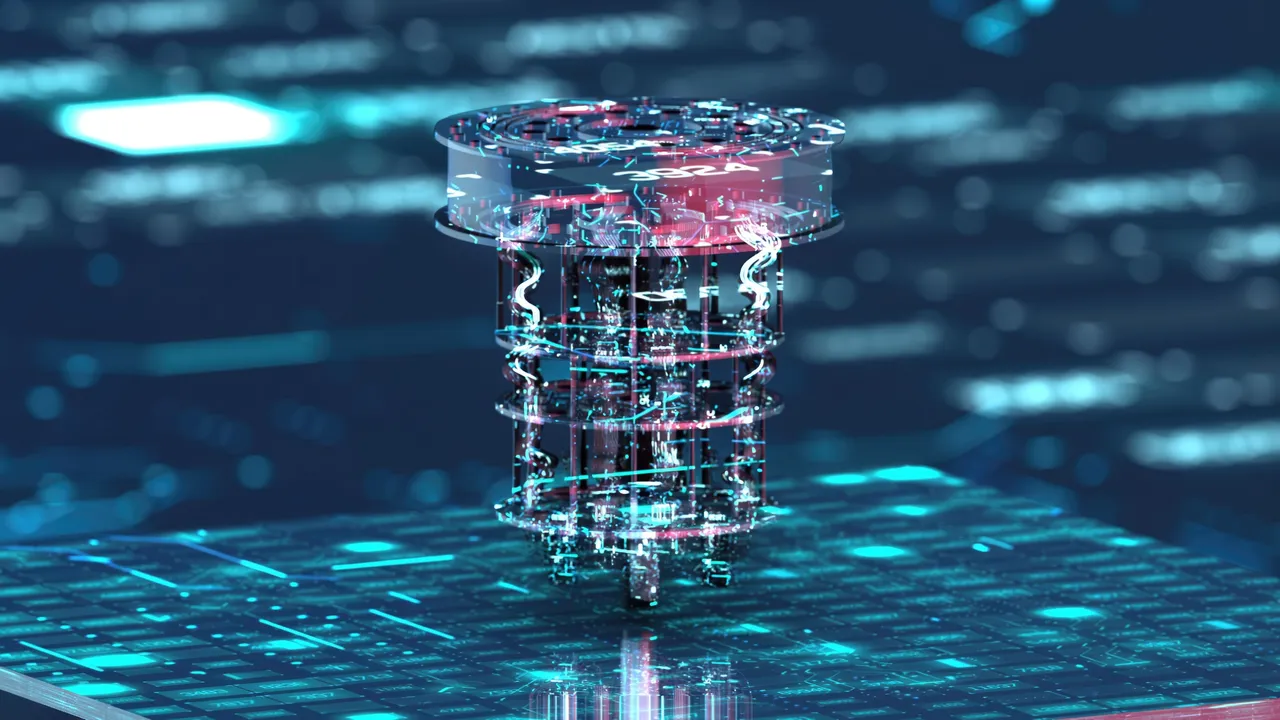
Quantum computing represents a fundamental shift in how computation is performed. Unlike classical computers that rely on bits which can be either zero or one, quantum computers use quantum bits, known as qubits, which can exist in multiple states simultaneously through superposition. This capability allows quantum computers to process complex calculations, analyze massive datasets, and solve problems that are currently intractable for classical systems. By 2025, quantum computing has progressed from theoretical research into practical experimentation and specialized commercial applications, with governments, technology companies, and academic institutions investing heavily in quantum hardware, software, and algorithm development.
Quantum computing leverages phenomena such as superposition, entanglement, and quantum interference to perform parallel computation at unprecedented scales. Superposition allows qubits to represent multiple values at the same time. Entanglement creates correlations between qubits that can be exploited to coordinate computations across multiple qubits. Quantum interference enables certain computational paths to reinforce correct solutions while canceling incorrect ones. These principles collectively allow quantum computers to explore a vast number of possibilities simultaneously, offering advantages in optimization, simulation, cryptography, and machine learning.
The potential impact of quantum computing extends across scientific research, cryptography, finance, logistics, pharmaceuticals, artificial intelligence, and material science. Quantum computing enables accurate simulation of molecular interactions, optimization of complex supply chains, faster solution of large scale mathematical problems, and accelerated training of machine learning models. As quantum hardware improves and quantum algorithms become more sophisticated, the technology is expected to transform industries and redefine the limits of computational capabilities.
Fundamentals of Quantum Computing
Understanding quantum computing requires knowledge of the core concepts, architectures, and computational principles that distinguish it from classical computing.
Qubits and Quantum States
The qubit is the fundamental unit of quantum computation. Unlike classical bits, which are strictly zero or one, qubits can exist in a superposition of zero and one simultaneously. The state of a qubit is represented mathematically as a linear combination of the two basis states with complex probability amplitudes. The superposition property enables quantum systems to explore multiple computational paths simultaneously, increasing parallelism exponentially with the number of qubits.
Quantum states are fragile and can be disturbed by interactions with the external environment, a phenomenon known as decoherence. Maintaining coherence is critical for quantum computation and requires careful isolation, error correction, and precise control of quantum gates. Different physical systems such as trapped ions, superconducting circuits, photons, or quantum dots are used to implement qubits, each with unique advantages, limitations, and operational requirements.
Entanglement and Quantum Correlation
Entanglement is a unique quantum phenomenon in which qubits become linked in such a way that the state of one qubit directly affects the state of another, regardless of the distance separating them. Entangled qubits allow coordinated computations, enable quantum teleportation of information, and form the basis for quantum error correction. Entanglement enhances computational power by creating correlations that classical systems cannot replicate, supporting algorithms that outperform classical approaches for certain problem domains.
Quantum Gates and Circuits
Quantum computation is performed using quantum gates, which manipulate qubit states according to specific rules. Quantum gates include single qubit operations such as rotation and phase shift, as well as multi qubit operations such as controlled not gates. Quantum circuits are sequences of quantum gates applied to qubits to implement algorithms. The design and optimization of quantum circuits are crucial for achieving correct results while minimizing error rates and decoherence effects. Advanced compiler techniques translate high level quantum algorithms into executable gate sequences for specific hardware platforms.
Quantum Measurement and Probability
Measurement in quantum computing collapses a qubit from its superposition state into one of the basis states, producing a classical output. Quantum algorithms are probabilistic, meaning that repeated measurements may be required to obtain statistically reliable results. The design of quantum algorithms carefully balances the probability distribution of outcomes to maximize the likelihood of correct solutions. Understanding measurement and probability is essential for interpreting results and optimizing quantum computations.
Quantum Computing Architectures
Quantum computers are built on various architectures, each designed to exploit quantum phenomena while addressing practical challenges such as coherence time, error rates, scalability, and control complexity.
1. Superconducting Qubits
Superconducting qubits use circuits cooled to extremely low temperatures to exhibit quantum behavior. These qubits are controlled by microwave pulses that manipulate their quantum states. Superconducting quantum computers are currently among the most mature platforms, offering fast gate times and scalability potential. Major technology companies and research institutions have developed superconducting systems that support tens to hundreds of qubits, enabling experimentation with quantum algorithms for optimization, chemistry simulation, and cryptography.
2. Trapped Ion Qubits
Trapped ion qubits confine individual ions in electromagnetic fields and manipulate their quantum states using laser pulses. Trapped ion systems offer high fidelity and long coherence times, making them suitable for precision quantum operations. The ability to entangle multiple ions efficiently allows these systems to perform complex quantum circuits with relatively low error rates. Trapped ion platforms are widely used in research, particularly for algorithm testing, benchmarking, and quantum networking experiments.
3. Photonic Qubits
Photonic qubits use light particles to encode quantum information. Photons offer natural robustness against decoherence and are ideal for long distance quantum communication. Photonic quantum computers are used in specialized applications such as quantum key distribution, optical quantum simulations, and communication networks. Integration of photonic qubits with other quantum platforms remains an active area of research for hybrid quantum systems.
4.Topological Qubits
Topological qubits encode information in the global properties of particles known as anyons, providing inherent protection against certain types of errors. Topological quantum computing remains largely experimental but promises long term fault tolerance and stability advantages. Researchers are exploring material science, braiding techniques, and error resilient architectures to realize scalable topological quantum computers.
Quantum Algorithms and Applications
Quantum computing requires algorithms designed to exploit superposition, entanglement, and interference. Classical algorithms cannot directly translate to quantum platforms due to these fundamental differences.
1. Quantum Simulation
Quantum simulation uses quantum computers to model physical systems that are computationally expensive for classical machines. Molecular interactions, chemical reactions, condensed matter physics, and material properties can be simulated with high accuracy. Quantum simulation has applications in drug discovery, energy storage, catalyst development, and material design. By simulating molecules and reactions natively in quantum space, researchers can predict behavior and optimize structures without extensive laboratory experimentation.
2. Quantum Optimization
Many real world problems involve searching for optimal solutions in large complex spaces, such as logistics routing, financial portfolio management, and production scheduling. Quantum algorithms like quantum annealing and variational approaches provide advantages in exploring vast solution spaces efficiently. Optimization applications demonstrate the practical benefits of quantum computing in industry and operations research.
3. Quantum Cryptography
Quantum computing impacts cryptography in two ways. First, quantum algorithms threaten classical cryptographic schemes such as RSA and ECC by potentially breaking them efficiently. Second, quantum systems enable quantum secure communication through protocols like quantum key distribution, which guarantees secure transmission based on quantum physics principles. Organizations must prepare for post quantum cryptography to protect sensitive information against future quantum attacks.
4. Quantum Machine Learning
Quantum computers accelerate certain machine learning tasks by encoding large datasets into quantum states and performing parallel transformations. Quantum machine learning offers promise in clustering, pattern recognition, optimization of neural networks, and reinforcement learning. While still experimental, this field is rapidly expanding as researchers explore hybrid classical quantum models that leverage strengths from both paradigms.
5. Quantum Metrology
Quantum systems provide highly sensitive measurement capabilities for time, magnetic fields, acceleration, and gravitational variations. Quantum metrology supports scientific research, navigation, medical imaging, and precision sensing. These applications benefit from quantum entanglement and superposition to achieve sensitivity beyond classical limits.
Challenges in Quantum Computing
Despite remarkable progress, quantum computing faces substantial technical, practical, and theoretical challenges that limit large scale adoption.
1. Decoherence and Noise
Quantum states are fragile and easily disrupted by external noise. Decoherence reduces the reliability of computations and limits the time available for processing. Error correction techniques are necessary but require additional qubits, increasing complexity and hardware demands.
2. Scalability
Building systems with hundreds or thousands of high fidelity qubits remains a major challenge. Physical control, thermal management, error rates, and inter qubit communication become increasingly difficult as systems scale. Scalable quantum hardware is essential for solving practical large scale problems.
3. Algorithm Development
Developing quantum algorithms that surpass classical performance for meaningful applications is still limited. Many quantum algorithms remain theoretical or experimental, and translating them into hardware executable solutions requires careful design, optimization, and validation.
4. Resource and Cost Limitations
Quantum computers require sophisticated hardware, cryogenic cooling, precise lasers, and advanced control electronics. These requirements result in high capital and operational costs. Widespread commercial adoption depends on reducing cost, improving reliability, and providing cloud based access to quantum resources.
5. Workforce and Expertise
Quantum computing demands specialized knowledge in quantum mechanics, computer science, mathematics, and engineering. Building an interdisciplinary workforce capable of designing, programming, and maintaining quantum systems is a long term challenge.
Strategic Adoption of Quantum Computing
Organizations considering quantum computing must develop strategic plans that balance research, experimentation, and practical deployment.
1. Identifying High Impact Use Cases
Potential applications such as material discovery, optimization, cryptography, and simulation should be evaluated for feasibility and return on investment. Organizations must focus on areas where quantum advantage is likely to emerge.
2. Cloud Access and Hybrid Solutions
Quantum cloud platforms allow organizations to experiment with quantum algorithms without investing in physical hardware. Hybrid classical quantum workflows combine the strengths of both paradigms, allowing incremental integration and practical results.
3. Collaboration and Research Partnerships
Partnerships with academic institutions, technology companies, and research consortia accelerate development, access to expertise, and benchmarking against industry standards.
4. Risk Management and Security
Quantum computing presents both opportunities and threats. Organizations must consider data security, post quantum cryptography, regulatory compliance, and ethical implications while planning adoption.
The Future of Quantum Computing
By 2025, quantum computing is transitioning from laboratory experiments to specialized commercial applications. The future promises more robust, scalable, and accessible quantum systems. Advancements in error correction, hardware integration, algorithm development, and hybrid computation will expand the impact of quantum computing across science, industry, and society. Governments, research institutions, and private enterprises will continue to invest in infrastructure, workforce development, and security strategies. The technology is expected to reshape medicine, energy, finance, logistics, artificial intelligence, and national security. Quantum computing represents a transformative frontier that, when fully realized, will redefine computational capabilities and open possibilities that remain inconceivable for classical computers.
No comments yet. Be the first to comment!