
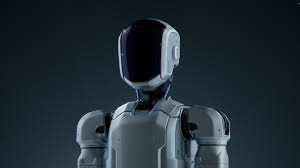
Robotics is the interdisciplinary field that designs, builds, operates, and applies robots to perform tasks that are often repetitive, dangerous, precise, or complex. Robots combine mechanical structures, sensors, actuators, control systems, and intelligent algorithms to interact with their environment autonomously or semi autonomously. By 2025, robotics has matured into a critical technology for manufacturing, healthcare, agriculture, logistics, exploration, entertainment, and domestic assistance. The field integrates mechanical engineering, computer science, electrical engineering, artificial intelligence, human computer interaction, and cognitive sciences to create systems that can perceive, plan, act, and adapt in dynamic environments.
Modern robotics is not limited to industrial machines performing repetitive tasks. Robots now include mobile platforms, humanoid robots, autonomous vehicles, drones, surgical assistants, and collaborative robotic systems that work alongside humans. Robotics has transformed industries by increasing efficiency, improving safety, reducing errors, and enabling innovation. The integration of artificial intelligence and machine learning allows robots to learn from experience, adapt to changing conditions, and make informed decisions in complex, unstructured environments.
The study of robotics also examines social and ethical considerations. Robots interact with humans in workplaces, homes, and public spaces. Designers must ensure that robotic behavior is predictable, safe, reliable, and aligned with societal values. As robotics continues to advance, the field increasingly emphasizes collaboration, shared autonomy, ethical design, and human centered intelligence.
Core Components of Robotics
Robots are complex systems composed of hardware and software components that work together to perceive, process, and act.
1. Mechanical Structures
The mechanical structure forms the body of a robot, providing support, mobility, and functionality. Components include frames, joints, limbs, wheels, tracks, and manipulators. Mechanical design depends on the intended task. Industrial robots may have articulated arms with multiple degrees of freedom for precision assembly. Mobile robots may use wheels or legs to navigate varied terrain. Drones rely on rotors and lightweight frames to achieve flight. The mechanical design must balance strength, flexibility, energy efficiency, and durability to withstand operational conditions and environmental challenges.
2. Sensors and Perception Systems
Sensors allow robots to perceive their surroundings and collect information necessary for decision making. Sensors include cameras, lidar, radar, ultrasonic range finders, tactile sensors, force sensors, temperature sensors, and chemical detectors. Perception systems process raw sensor data to detect objects, measure distances, track motion, recognize patterns, and interpret complex environments. Accurate perception is essential for autonomous navigation, obstacle avoidance, object manipulation, and interaction with humans. Advanced perception systems integrate multiple sensor modalities to provide redundancy, improve reliability, and enable richer understanding of the environment.
3. Actuators and Motion Control
Actuators are devices that convert control signals into physical movement. Common actuators include electric motors, hydraulic cylinders, pneumatic systems, and shape memory alloys. Motion control systems regulate the speed, direction, and force of actuators to achieve precise movement. Control algorithms coordinate actuators with sensory feedback to maintain stability, follow trajectories, and execute complex tasks. High precision motion control is particularly critical in surgical robotics, industrial assembly, and aerospace applications.
4. Control and Computation
The control system of a robot processes sensor data, generates control commands, and ensures coordinated action. Control architectures range from centralized systems to distributed multi agent frameworks. Modern robots integrate onboard processors, edge computing, and cloud connectivity to support computation intensive tasks such as machine learning, path planning, and simulation. Control algorithms include classical techniques such as proportional integral derivative controllers, as well as advanced methods like model predictive control, adaptive control, and reinforcement learning. Reliable control ensures that robots perform tasks accurately, safely, and efficiently.
5. Artificial Intelligence and Decision Making
Artificial intelligence enhances robotic autonomy by enabling perception, reasoning, learning, and planning. AI techniques include computer vision, natural language processing, reinforcement learning, probabilistic modeling, and knowledge representation. Robots use AI to identify objects, predict human intentions, plan optimized paths, adapt to environmental changes, and make decisions in uncertain conditions. The combination of AI and robotics creates intelligent systems capable of performing tasks that were previously impossible or impractical with traditional programmed instructions.
Types of Robots
Robots are categorized based on functionality, mobility, operational environment, and application domain.
1. Industrial Robots
Industrial robots are widely used in manufacturing for assembly, welding, painting, packaging, and material handling. They operate in controlled environments with repetitive, high precision tasks. Modern industrial robots are equipped with AI for quality inspection, adaptive motion, and collaborative operation with human workers. These robots enhance productivity, reduce errors, and improve workplace safety by taking on hazardous or physically demanding work.
2. Mobile Robots
Mobile robots navigate through environments to perform tasks such as delivery, inspection, exploration, and transportation. Examples include autonomous warehouse vehicles, delivery drones, autonomous ground vehicles, and underwater exploration robots. Mobility requires advanced navigation, obstacle detection, localization, mapping, and path planning. Mobile robots often operate in dynamic, unstructured environments where adaptability and robustness are essential.
3. Humanoid Robots
Humanoid robots mimic human anatomy and behavior, often with arms, legs, head, and torso. They are designed for interaction with humans, research on human cognition, service roles, and assistive functions. Humanoid robots require advanced balance control, motion planning, perception, and natural interaction capabilities. They are used in healthcare, education, public engagement, and service industries to perform tasks that involve human like manipulation or communication.
4. Surgical and Medical Robots
Medical robotics includes surgical assistants, teleoperation systems, rehabilitation devices, diagnostic robots, and laboratory automation. Surgical robots provide precise manipulation, minimally invasive procedures, and enhanced visualization for surgeons. Rehabilitation robots assist patients in therapy by guiding motion, monitoring progress, and adjusting resistance. Medical robots require strict safety, reliability, hygiene, and regulatory compliance.
5. Service and Domestic Robots
Service robots perform household tasks, cleaning, security, monitoring, and personal assistance. They include vacuum cleaners, lawn mowers, companion robots, and telepresence devices. Domestic robots must navigate complex, cluttered environments and interact safely with humans and pets. User friendly interfaces, adaptive behavior, and contextual awareness are critical for effectiveness and acceptance.
6. Exploration and Rescue Robots
Exploration robots operate in hazardous or inaccessible environments such as space, deep sea, disaster sites, and extreme climates. They are equipped with robust mobility, advanced sensors, and autonomous decision making to perform reconnaissance, mapping, data collection, and rescue operations. These robots expand human capabilities by operating in conditions that are too dangerous or impractical for direct human presence.
Robotics Applications
Robotics has transformed numerous industries and continues to expand into new domains with wide ranging impacts.
1. Manufacturing and Industry
Robotics has revolutionized production lines, enabling precise, efficient, and continuous operation. Robots perform assembly, welding, material handling, inspection, and packaging. Integration with AI allows adaptive workflows, predictive maintenance, and quality assurance. Robotics reduces operational costs, improves output consistency, and supports flexible manufacturing in a globalized supply chain.
2. Healthcare and Medicine
Medical robotics enhances surgical precision, patient care, rehabilitation, diagnostics, and laboratory automation. Surgical robots allow minimally invasive procedures, reducing recovery time and complication risks. Rehabilitation robots assist patients with mobility training and therapy monitoring. Service robots support elderly care, medication delivery, and hospital logistics. Robotics contributes to improved health outcomes, efficiency, and patient safety.
3. Agriculture and Food Production
Agricultural robots automate planting, harvesting, irrigation, monitoring, and crop management. Robots equipped with sensors, imaging devices, and AI enable precision agriculture by optimizing resource use, detecting pests and diseases, and improving yield. Robotics increases efficiency, reduces labor dependency, and supports sustainable practices in farming.
4. Logistics and Supply Chain
Robotics streamlines warehousing, material handling, inventory management, and delivery. Autonomous mobile robots navigate warehouses, sort packages, and transport goods with efficiency and accuracy. Drones and autonomous vehicles support last mile delivery. Robotics integration enhances speed, accuracy, traceability, and scalability in logistics operations.
5. Exploration and Disaster Response
Robots support space exploration, underwater research, volcanic monitoring, and disaster response. They operate in extreme environments, collect critical data, and perform tasks inaccessible to humans. Disaster response robots assist in search and rescue, hazardous material handling, and structural inspection, improving safety and effectiveness in crisis situations.
6. Entertainment and Social Interaction
Robots are increasingly used in entertainment, gaming, education, and social engagement. Robots provide immersive experiences, interactive teaching tools, and companionship. Social robots support learning, play, and communication, fostering engagement, collaboration, and emotional interaction.
Challenges in Robotics
Despite rapid advancement, robotics faces technical, operational, and ethical challenges.
1. Perception and Sensing
Accurate perception in dynamic, unstructured environments remains difficult. Sensors must operate reliably under variable lighting, weather, noise, and cluttered surroundings. Integrating multiple sensor modalities and processing large volumes of data in real time presents ongoing challenges.
2. Mobility and Manipulation
Designing robots that move efficiently, maintain stability, and manipulate objects in complex environments is difficult. Legged locomotion, grasping fragile objects, and dynamic adaptation require sophisticated mechanical design, control algorithms, and feedback systems.
3. Autonomy and Decision Making
Robots operating independently require advanced decision making, planning, learning, and reasoning capabilities. Handling uncertainty, incomplete information, and unstructured environments requires robust AI, simulation, and real time adaptation.
4. Safety and Reliability
Robots interacting with humans or operating in critical systems must prioritize safety, fault tolerance, and reliability. Redundant systems, real time monitoring, and fail safe mechanisms reduce risks and ensure trust.
5. Ethical and Social Considerations
The deployment of robots raises ethical questions including privacy, job displacement, human autonomy, accountability, and societal impact. Designers must consider human wellbeing, societal norms, and regulatory compliance in creating responsible robotic systems.
Future Directions of Robotics
By 2025, robotics continues to evolve with new capabilities, applications, and integration with emerging technologies.
1. Collaborative Robots
Collaborative robots or cobots are designed to work safely alongside humans. Cobots enhance productivity, reduce repetitive tasks, and support human workers in shared environments. They rely on advanced sensing, adaptive control, and safety protocols.
2. Swarm Robotics
Swarm robotics involves coordination of large numbers of simple robots to achieve complex collective behavior. Applications include environmental monitoring, search and rescue, logistics, and exploration. Swarm algorithms emphasize decentralized control, robustness, and emergent intelligence.
3. Robotics and Artificial Intelligence Integration
Robots increasingly integrate AI for perception, planning, learning, and natural interaction. Intelligent robots can adapt to user needs, optimize workflows, and improve autonomous operation. AI enhances robotics in healthcare, industry, autonomous vehicles, and smart environments.
4. Soft Robotics
Soft robotics uses flexible, compliant materials to create robots capable of delicate manipulation, safe human interaction, and adaptive movement. Applications include medical devices, wearable exoskeletons, search and rescue, and biomimetic systems.
5. Human Centered Robotics
The future emphasizes human centered design, ensuring that robots augment human capabilities, enhance safety, support accessibility, and align with ethical standards. User experience, transparency, and trust remain central in robotics development.
Robotics in 2025 represents a convergence of engineering, computing, artificial intelligence, and human centered design. Robots perform tasks ranging from industrial assembly and surgical assistance to exploration, logistics, domestic service, and social interaction. Successful robotic systems integrate mechanical design, sensors, actuators, control, and intelligent algorithms while addressing safety, usability, and ethical considerations. Future robotics promises collaborative, adaptive, and intelligent systems capable of operating safely in complex environments and enhancing human capabilities. The continued evolution of robotics will transform industries, society, and daily life, creating opportunities for innovation, efficiency, safety, and improved quality of life.
No comments yet. Be the first to comment!